Reviewing the Paper Towel Silhouette Icon Vector
As a designer who spends half my life staring at digitized files and the other half watching needles punch through fabric, I have learned to be skeptical of simple icons. It is easy to assume that a basic shape requires no thought, but in the world of machine embroidery, simplicity is often where mistakes hide. When I first pulled up the Paper Towel Silhouette Icon Vector, my initial reaction was one of cautious optimism. The clean lines suggested versatility, but I needed to know if this graphic could survive the transition from screen to stitch without losing its character or becoming a tangled mess of thread.
First Impressions and Visual Mood
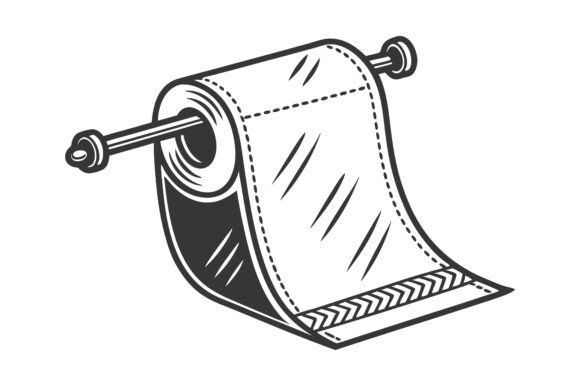
The design presents a minimalist aesthetic that feels modern and utilitarian. There is no unnecessary clutter, which is exactly what you want when working with small hoop sizes or textured fabrics. The silhouette captures the essential form of a paper towel roll instantly, creating a mood that is domestic yet stylish. For embroidery designers, this kind of clarity is gold. It means the visual personality is strong enough to stand alone as a focal point on a tote bag design or subtle enough to serve as a decorative accent on a kitchen towel. The layout is balanced, avoiding the heavy, dense areas that often cause puckering in finished products.
Real-World Application: The Kitchen Tote Scenario
To truly evaluate this asset, I imagined a specific real-life scenario. A client wanted a set of custom embroidered tote bags for a boutique home goods shop. They needed something that screamed "kitchen essential" without being overly literal or cartoonish. This is where the Paper Towel Silhouette Icon Vector shines. I visualized stitching this icon onto a sturdy canvas tote using a contrasting thread color. The result would be a chic, understated look that appeals to buyers who appreciate handmade product quality.
In this context, the icon works beautifully as part of a larger composition. Imagine it paired with simple text like "Clean Up" or "Home Essentials." Because the shape is recognizable even at a smaller scale, it maintains its integrity on curved surfaces like the side of a cap or the chest of a sweatshirt embroidery project. For Etsy sellers and small shop owners, this versatility translates directly to product value. You are not just selling an image; you are selling a recognizable symbol that fits seamlessly into lifestyle branding.
Performance Across Different Embroidery Projects
When considering how this graphic performs in real-life embroidery situations, we must look beyond just t-shirts. This icon is surprisingly adaptable. For baby embroidery, such as on a bib or a nursery decor item, the soft curves of the roll can be rendered with a gentle satin stitch to avoid scratchiness. For holiday embroidery, it could be part of a gift set for a housewarming present, perhaps stitched onto a high-quality linen tea towel.
However, the application matters. On a personalized gift like a denim apron, the icon holds up well against the rugged fabric texture. But on stretchy fabric, such as a fitted t-shirt, you must be mindful of stabilization. The open nature of a silhouette means there is less fill stitch coverage, which can sometimes lead to visibility of the backing if not handled correctly. For commercial embroidery projects, consistency is key. This vector allows for easy scaling, ensuring that whether it is on a small embroidered patch or a large pillow cover, the proportions remain pleasing to the eye.
Where Caution Is Required
While the design is robust, it is not without its pitfalls. Designers should use care when applying this to dark fabric if they are not using adequate underlay stitches. A silhouette relies on contrast, so if the thread colors do not pop against the background, the design will disappear. Additionally, tiny details can get lost if the hoop size is too small or if the stitch density is too low.
If you are working with detailed corners or trying to integrate this into complex lettering, ensure that the running stitch paths are optimized. Dense stitch areas should be avoided in the center of the roll if you want to maintain a flat, professional finish. For items that need frequent washing, such as kitchen towels or baby clothes, test the durability of the edges. A poorly digitized outline can fray over time, reducing the perceived quality of your handmade product.
Enhancing Brand Consistency and Customer Trust
For creative entrepreneurs and digital product sellers, the visual appeal of your assets directly impacts buyer engagement. Using a clean, professional icon like this helps establish brand consistency. When customers see a well-executed design on your printable mockup or in your shop listings, it builds trust. They perceive the finished product as high-value. This is crucial for craft business items where competition is fierce. A sloppy icon suggests a sloppy product, but a crisp, well-stitched silhouette suggests attention to detail and professionalism.
In the realm of Print Materials Mockups and Graphics, this vector serves as a bridge between digital design and physical creation. It allows you to preview how the design will look on various products before committing to production. This reduces waste and increases confidence in your final offerings.
Practical Notes for the Embroidery Designer
Before you load this file into your machine, take a moment to prepare. Always test the design on scrap fabric first. This is non-negotiable. Check the thread color contrast against your chosen material. If you are using a light thread on a light fabric, consider adding a border or changing the stitch type to a denser fill stitch for better visibility. Review the stitch density settings in your software. If the default settings seem too sparse, adjust them to ensure full coverage.
Confirm the hoop size you intend to use. While this icon scales well, pushing it beyond its optimal size can result in pixelation or awkward spacing between stitches. Inspect small details closely in the preview mode. Use proper stabilizer, especially for lightweight or stretchy materials. A cut-away stabilizer might be best for garments that will undergo stress, while a tear-away could suffice for stable cottons.
Finally, always check the licensing terms. While this article evaluates the design from a technical and aesthetic standpoint, you must confirm whether the file allows for commercial use. If you are an Etsy seller or run a small shop, ensuring you have the right to sell finished items or digital embroidery files derived from this asset is critical. Do not assume; verify. Once you have cleared these hurdles, the Paper Towel Silhouette Icon Vector becomes a powerful tool in your creative arsenal, ready to elevate your next embroidery project from ordinary to exceptional.